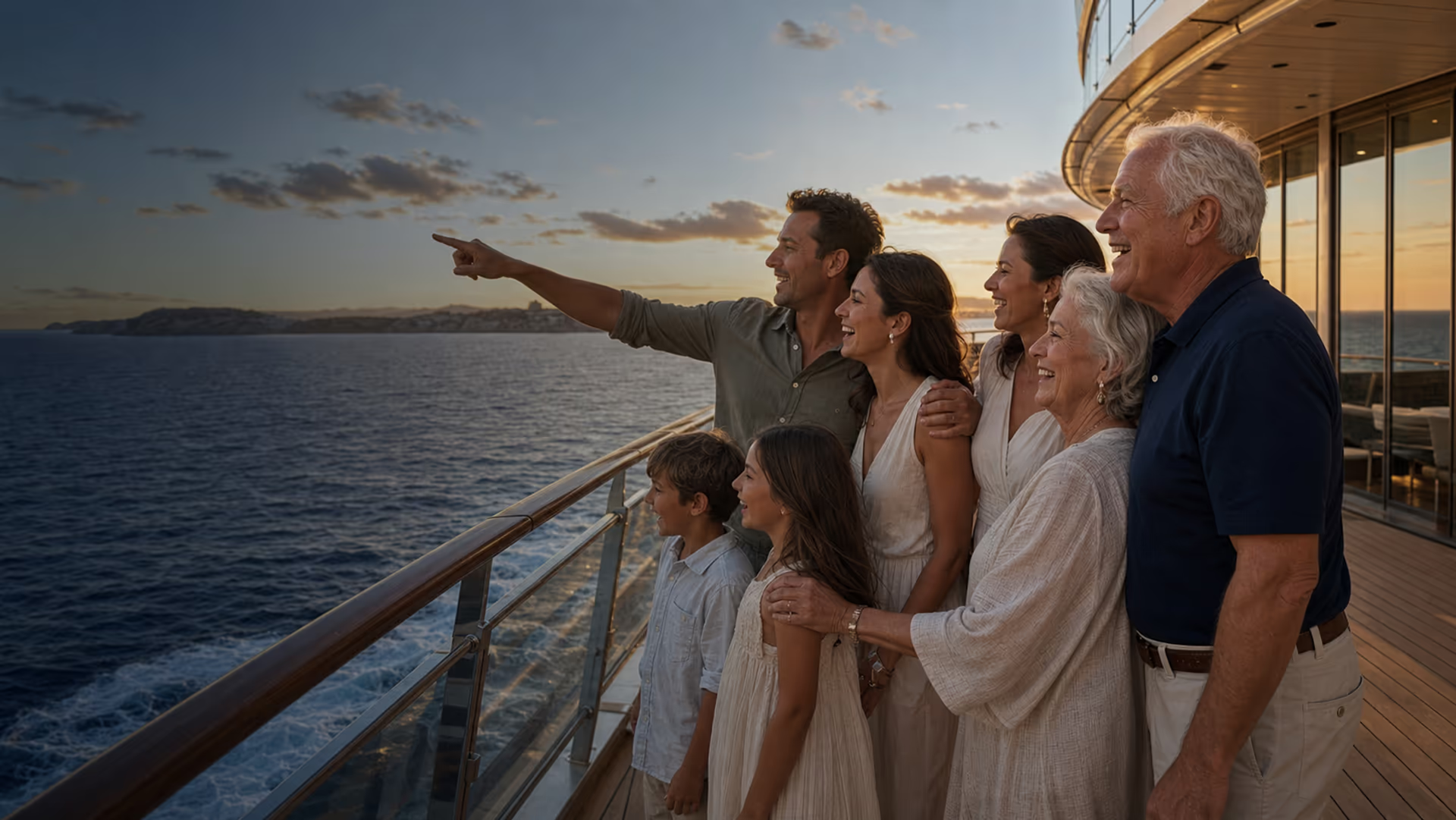
The grandparents on the wedding side. The cousins who have not seen each other since 2019. The kids who are now teenagers. Three generations, one ship, one named coordinator narrowing the right line for your family’s shape — not the right line in general.
Where the family cabins sit on the ship matters more than which ship.
Most reunion groups assume the cabin category drives the experience. It doesn’t — the deck and position drive the experience. A balcony on deck 12 above the pool deck is louder, longer-walked, and motion-noisier than an oceanview on deck 8 midship. The advisor places the proximity strategy before the tier strategy.
Rule 01
Deck 7 through 9, midship, on most mainstream lines.
Deck 6 sits above the lobby and theater — late-night noise from public spaces. Deck 12 and above stack under pool deck and the buffet — early-morning chairs scraping overhead. Mid-decks midship are the noise-quietest, motion-quietest, walking-distance-shortest position to dining and amenities. The grandparents will thank you.
Rule 02
Connecting cabins are the goal, not adjacent cabins.
Connecting cabins share an interior door — useful for one family with young kids (parents in one, kids in the next). Adjacent cabins are merely next to each other. Connecting inventory is limited and books up first; the advisor places those holds before opening the group hold to households.
Rule 03
Suite-class proximity for the senior generation.
Junior Suites and balcony cabins for the grandparents are not just about cabin tier — they are about being on the same deck and within fifty paces of the family group's central cabin cluster. The advisor maps proximity before tier.
Rule 04
Avoid Deck 2 and below.
Below the waterline, motion is felt more; on some ships these are interior-only cabins; on others they are crew-adjacent. The advisor flags these when the line's group inventory tries to assign them.
02 / 05Kids programs by cruise lineEight major lines
the kid cohort changes the line
Eight cruise lines, eight different youth programs. The kid cohort’s ages narrow the line.
For a family reunion, the kid programming is a meaningful narrowing dimension — often more decision-relevant than the destination. The advisor matches the kid cohort’s age range and play style to the line that absorbs the dinner-hour youth supervision best.
Children's program age bands and supervision hours across 8 mainstream cruise lines.
Cruise Line
Youth Program
Age Range
Advisor’s Noticing
Royal Caribbean International
Adventure Ocean
6 months to 17 years
Largest at-sea youth program; six age groups; teen-only clubs and venues.
Disney Cruise Line
Disney's Oceaneer Club + Vibe (teens)
3 months to 17 years
Character-led programming; nursery for infants; the strongest youth program at sea by reputation.
Norwegian Cruise Line
Splash Academy + Entourage (teens)
3 to 17 years
Late-night teen lounges; freestyle programming that maps to NCL's open dining model.
Carnival Cruise Line
Camp Ocean + Circle C + Club O2 (teens)
2 to 17 years
Three-tier youth program; strong on activity-led play; family-oriented atmosphere fleet-wide.
MSC Cruises
Doremi Club + Teens Club
3 to 17 years
LEGO partnership; European programming style; multi-language counselors.
Princess Cruises
Camp Discovery
3 to 17 years
Discovery and Animal Planet partnerships; smaller scale than RC or Carnival.
Holland America Line
Club HAL
3 to 17 years
Smaller youth contingent; better fit for reunion groups where kids are not the center of programming.
Celebrity Cruises
Camp at Sea
3 to 17 years
Premium-feel youth programming; lower kids-per-cabin ratio fleet-wide.
03 / 05Who pays for whomFour common patterns
the awkward conversation, structured
Multigenerational money is a structural problem, not an emotional one.
The advisor handles deposit invoicing so each household is billed for what its host wants billed for — and nothing else. Here are the four most common patterns and how each maps to the booking machinery.
01
The grandparents sometimes underwrite the whole trip (a milestone-year gift). Plan around an open per-cabin budget cap so the group host can hold the group rate before the gift conversation.
02
The parents sometimes pay only their own immediate household's cabin (one cabin per family unit). The advisor structures the deposits so each household invoices separately — no one is fronting another family's deposit.
03
Adult children sometimes pay for their parents' cabin as a reverse gift. The advisor moves the senior cabin into the host's billing if requested — invisible to the parents until embarkation.
04
Mixed: each household pays its own, with the host paying the tour-conductor credit cabin as a thank-you to the planner (often the eldest aunt or uncle).
04 / 05Ship fit by reunion sizeThree brackets
size narrows the shortlist
Three reunion-size brackets, three different ship strategies.
Mainstream lines with strong youth programming work. Royal Caribbean Oasis-class, Norwegian Encore, Carnival Excel-class. The Adventure Ocean / Splash Academy programs absorb the kid cohort; dining works in two adjacent group tables.
13–18 cabins (24–36 guests, 3 generations)
Mid-size to large mainstream ships. Royal Caribbean Quantum-class, Celebrity Edge-class, Princess Sun- or Royal-class. Specialty restaurants book the occasion-night dinner. Suite-class proximity for grandparents matters most here.
Larger mainstream ships with private dining venues. Royal Caribbean Icon-class, NCL Prima-class, Carnival Excel-class. Private dining room for the group's occasion night is achievable at this size. Group hosts the cocktail party perk.
Asked weekly. Answered the way we would answer on a call.
How early should we start planning a family reunion cruise?+
For 8 to 18 cabin family reunions, plan 9 to 12 months out. For 18 to 30 cabin reunions with three generations, plan 12 to 18 months out. The locked weeks — Christmas / New Year, spring break, July 4th — close roughly 12 months out on most lines. Suite-class inventory closes earliest. The single most common reason a family reunion cruise does not happen is starting six months out and finding the right ship's suites already gone.
Can my family with young kids be in a different cabin tier than the grandparents?+
Yes — and this is the typical pattern. Interior cabins for the younger cousins or single-adult travelers, balcony cabins for the parents-with-kids households, and a Junior Suite or full Suite for the grandparents. Everyone gets the group rate within their tier, plus the amenity package per cabin. The cabin assignments still earn the group's tour-conductor credit pool. The advisor places suite-class proximity for the senior generation as the first priority of the cabin map.
What's the cabin proximity strategy for a multigenerational group?+
Deck 7 through 9, midship, on most mainstream lines. Deck 6 sits above the lobby and theater (late-night noise); decks 12 and up stack under pool deck and buffet (early-morning noise). Mid-decks midship are quietest for motion and noise, shortest walk to dining and amenities, and the easiest staircase climb for the senior generation. Connecting cabins are sought for families with young kids; suite-class proximity for grandparents is the second priority. The advisor places these holds before opening the group hold to households.
Do we have to dine together every night?+
No, and most reunion groups do not. The advisor coordinates one group dining time on at least one night (usually night three — past sea-legs, before final-night packing). Other nights, households dine on their own time. Specialty restaurants are pre-bookable; the advisor reserves one for the group's occasion night (the reunion dinner, the toast, the milestone moment) early. Kids' programs (Adventure Ocean, Splash Academy, Camp Ocean) handle the dinner hour for the kid cohort so the adults can dine without the high-chair tetris.
How do the kids' programs differ across cruise lines?+
Royal Caribbean's Adventure Ocean is the largest at-sea youth program and the strongest for the 9 to 14 cousins cohort. Disney Cruise Line is the strongest for kids under 12 (and the highest-rated by far) but the ship pricing reflects it. Norwegian's Splash Academy + Entourage maps well to NCL's freestyle dining model. Carnival's Camp Ocean works for activity-led play and is the most affordable. MSC's Doremi Club has European programming with a LEGO partnership. The advisor narrows by your kid cohort's ages — the 3 to 5 group, the 6 to 12 group, and the teen cohort each have different sweet spots across lines.
What if one of the grandparents uses a wheelchair or has limited mobility?+
The advisor flags this in the group hold and selects an accessible cabin or wheelchair-accessible suite on the same deck as the group's central cabin cluster. The deck choice matters more for limited-mobility guests — midship reduces walking distance to dining, the theater, and the spa. Embarkation port matters too: some ports require gangway walking; others have ramped boarding. The advisor names the embarkation logistics for the mobility-impacted guest in writing before the group commits to a sailing.
Can the family reunion cruise include the milestone occasion (anniversary, big birthday)?+
Yes, and this is one of the most common reunion shapes. The tour-conductor credit can be applied to the celebrant's cabin as a free-cabin gift; the cocktail party perk for groups of 16+ becomes the toast venue; the specialty restaurant becomes the occasion-night dinner. The advisor coordinates the photographer, the cake, and the venue with the ship's hotel director before the sailing. The milestone is built into the group's coordination from the brief, not added on after the booking.
Settle In. Sail Beyond.
The cousins, the grandparents, one ship, one named coordinator.
Send the brief: how many cabins, how many generations, the rough month, the budget per cabin, and any mobility or dietary flags. We return three reunion-fit sailings across three cruise lines in 48 hours.