8
cruise lines compared
Every major line in this guide is checked against official line sources.
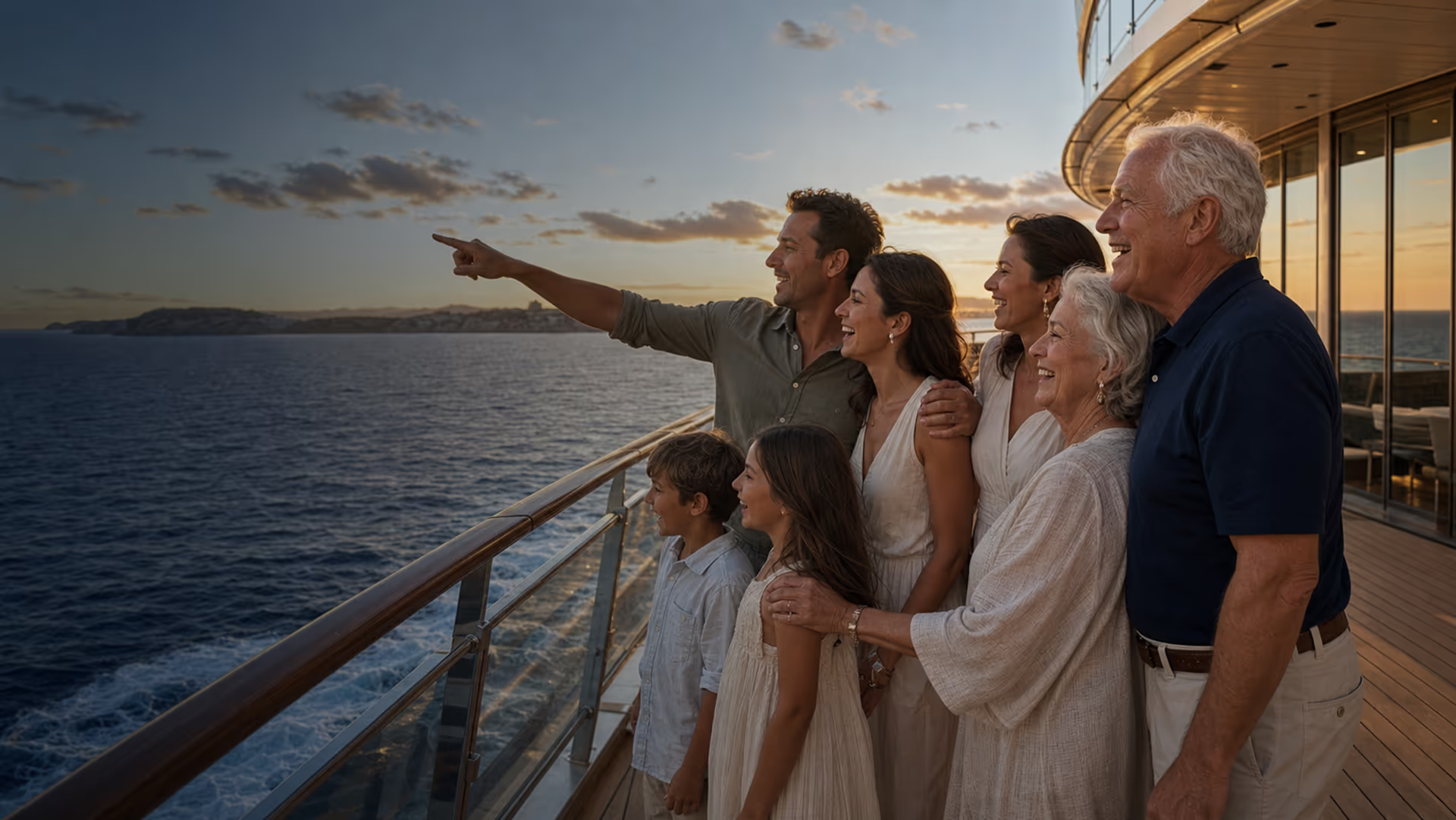
Compare cruise lines for wheelchair-accessible cabins, autism or sensory needs, service dogs, CPAP or oxygen, hearing or vision support, and diet or medication planning before you deposit.
Every major line in this guide is checked against official line sources.
Autism, mobility, hearing, vision, diet, medical equipment, and service dogs.
Interpreter, access, medical, and service-dog timing varies by line.
We narrow the sailing before deposit. We do not overpromise the ship.
Choose the situation closest to your traveler. Each path takes you to the questions that matter before a cabin is held or a deposit is paid.
Path 1 - Before booking
Can I get a wheelchair-accessible cruise cabin that actually fits?
Start with cabin inventory, device size, bathroom setup, scooter storage, transfers, and tender ports. A ship can be accessible in public areas and still be wrong if the cabin or itinerary does not fit the traveler.
Path 2 - Compare options
Which cruise lines are autism-friendly or sensory-certified?
Look for the public support framework, then test the real sailing: boarding, crowds, dining, youth programming, shows, and ports. Autism-friendly or sensory-certified support helps, but it does not make a ship quiet or privately supervised.
Path 3 - Before booking
Is a service dog allowed on a cruise?
Major lines generally distinguish task-trained service dogs from pets and emotional-support animals. The harder work is often the itinerary: country rules, import permits, relief-area timing, supplies, behavior, and dog care.
Path 4 - Before booking
Can I bring CPAP or oxygen on a cruise?
Usually, but the details matter. Cruise lines may require forms, approved suppliers, electrical guidance, distilled-water requests, battery information, or advance approval. Most lines do not supply oxygen for you.
Path 5 - Compare options
Can I request ASL, captioning, visual alerts, large print, or braille?
Many lines publish hearing and vision support, but timing and ship details vary. The right request names the moments that matter most: safety briefing, shows, dining, guest services, excursions, youth spaces, or stateroom alerts.
Path 6 - Compare options
Can dining and medication storage be planned before sailing?
Yes, if the need is documented early and the traveler brings enough supplies. We check dining notes, allergy handling, refrigeration, sharps disposal, excursion timing, extra medication, and insurance or clinical guidance.
Current official cruise-line pages decide what we publish as fact. Where official detail is thin, we say to confirm directly before treating a sailing as the right fit.
Every line row is grounded in the line's own accessibility page, official PDF, official FAQ, or access-office guidance.
Royal Caribbean, Celebrity, Disney, Carnival, Norwegian, Holland America, MSC, and Princess are all represented.
We start with the traveler: sensory load, mobility device, hearing support, medical equipment, service dog, or diet.
We do not call any ship fully accessible. Cabin, ship, itinerary, documentation, and notice all matter.
A cruise line can be excellent for one traveler and wrong for another. These are the seven planning paths we use to narrow the sailing before cabin deposit.
Royal Caribbean and Celebrity publish autism-friendly support, Carnival publishes sensory-certified support, and Disney publishes family disability guidance. NCL, Holland America, MSC, and Princess route these needs through access teams rather than a public autism program.
why it matters
The useful question is not whether a ship is branded autism-friendly. It is whether the traveler can handle boarding, drills, dining, kids programming, shows, and ports on that specific sailing.
where to start
Start with Royal Caribbean, Celebrity, Carnival, or Disney for the most visible public framework; use NCL, Holland America, MSC, or Princess when documented requests and itinerary-level calm matter most.
what we will ask
Accessible staterooms are limited across all lines and should be held early. Every major line in this guide publishes an access path, but ship, cabin, device size, storage, transfers, tenders, and vendor delivery decide the fit.
why it matters
The cabin is only the first pass. We also check door width, bathroom setup, scooter storage, embarkation help, accessible transfers, tender ports, pool lifts, and transfer ability.
where to start
Royal Caribbean, Celebrity, NCL, Carnival, and Holland America publish the broadest mobility planning language. Princess and MSC can work with careful access-office confirmation.
what we will ask
Sign-language interpretation, assistive listening, captioning, visual alerts, and stateroom kits vary by line and require early notice. Published notice windows range from about 30 days to 90 days.
why it matters
Interpreter availability is itinerary- and timing-sensitive. We document whether ASL is needed for shows, dining, safety briefing, excursions, guest services, or a specific traveler.
where to start
Royal Caribbean, Celebrity, Carnival, Disney, Holland America, and NCL publish clearer hearing-support language. Princess routes requests through the Access Office. MSC requires direct confirmation.
what we will ask
Braille, tactile signage, large-print material, orientation help, and service-dog coordination exist on multiple lines, but travelers should not assume every menu, show, excursion, app flow, or port is equally accessible.
why it matters
We separate ship navigation from port navigation. A ship may have tactile signage and large-print materials while an excursion or old port street creates a different access problem.
where to start
Carnival, Holland America, Disney, Royal Caribbean, Celebrity, and NCL have useful public language for visual accommodations. Princess and MSC should be confirmed by ship.
what we will ask
Cruise lines can document medical, dietary, allergy, sharps, refrigeration, and medication needs, but travelers must bring their own supplies and should not treat a ship medical center as a substitute for medical planning.
why it matters
This is a logistics track, not a discount track. The booking needs accurate notes, the dining team needs diet or allergy detail, and the traveler needs extra medication, storage plans, and insurance.
where to start
NCL, Holland America, Celebrity, Disney, Carnival, Royal Caribbean, MSC, and Princess all offer a path to disclose medical or dietary needs.
what we will ask
Cruise lines generally do not supply oxygen. They coordinate approvals, forms, vendor delivery, distilled water, electrical safety, and equipment logistics.
why it matters
The equipment details matter: device type, dimensions, batteries, vendor, electrical needs, flight rules, port rules, and shore-excursion plans.
where to start
Royal Caribbean, Celebrity, NCL, Holland America, Disney, MSC, Carnival, and Princess all require direct documentation for medical equipment.
what we will ask
Major cruise lines distinguish trained service dogs from pets and emotional-support animals. The traveler is responsible for dog care, supplies, behavior, and port-by-port import documentation.
why it matters
A service dog cruise is really a port-permit project. The line's shipboard policy is only one layer; the itinerary countries can be the harder layer.
where to start
Royal Caribbean, Celebrity, Disney, Carnival, Holland America, MSC, NCL, and Princess all publish service-animal or access-office guidance.
what we will ask
The guide names what each line is strongest for and where an advisor still needs direct confirmation. It helps narrow the sailing, but it is not a guarantee of accommodation.
Broad accessibility planning, autism-friendly support, mobility documentation, oxygen review, and service-dog procedures.
Notice: Submit requests at booking when possible. Public guidance includes 60 days for sign-language interpretation, 30 days for many equipment or service requests, and 72 hours for larger groups.
what to confirmWheelchair help is not personal-care support. Accessible cabins, interpreters, relief areas, oxygen approvals, and tender access still depend on notice, ship, itinerary, and availability.
Premium ships with structured special-needs pages, autism-friendly support, visual and hearing support, medical needs, and service-dog rules.
Notice: Request support as early as possible. Public guidance includes 60 days for ASL interpretation and 30 days for service-dog relief area planning.
what to confirmAccessible cabins and interpreter support are capacity-limited. Shore excursions, tenders, and port rules still need itinerary-level confirmation.
Families who need accessible staterooms, family disability planning, medical-condition guidance, sensory expectations, and service-animal planning.
Notice: Contact Special Services early. Public materials include 30 days for many U.S. sign-language requests and longer listed windows for some European sailings.
what to confirmDisney can be strong for families, but youth clubs are not private aides, assembly drills can be intense, and service-animal port permits can take substantial lead time.
Value-minded accessible cruising, sensory-certified support, broad mobility access, hearing support, blind and low-vision support, and service dogs.
Notice: Complete the applicable access forms early. Public hearing guidance strongly favors 60 days for sign-language interpretation.
what to confirmGuests who need personal care must travel with a companion. Sensory-certified does not mean quiet, empty, or one-on-one supervised.
Travelers who want a defined Access Desk process, mobility-device planning, CPAP support, accessible transfers, service-animal routing, and allergy or dietary notes.
Notice: NCL publishes 90 days for interpreters and 45 days for many other needs, four days for distilled-water CPAP requests, and 15 days for accessible transportation in U.S. ports.
what to confirmThe Access Desk process is strong, but missing the notice window can narrow options quickly. Travelers must still manage personal care and device storage.
Older travelers, calm itinerary planners, hearing or visual accommodations, respiratory needs, allergies, service animals, and accessible stateroom coordination.
Notice: Submit the Special Requirements Information form immediately after booking or at least 45 days before departure when possible.
what to confirmPublic detail is consolidated rather than split by every need. Confirm ship-specific pool lifts, excursions, transfers, and companion-care assumptions.
Planned accessibility and medical requests, newer-ship access potential, service-dog timing, oxygen review, liquid oxygen review, and medical-equipment coordination.
Notice: Submit accessibility and medical requests at booking or no later than 30 days before sailing. MSC publishes 60 days for service dogs and 30 days for mechanical ventilation requests.
what to confirmPublic details are less segmented than some competitors. Confirm cabin, route, tender, port, and equipment details directly before treating it as the right fit.
Accessible-route planning, access-office coordination, mobility questionnaires for transfers and excursions, service animals, and vision or hearing requests.
Notice: Use the Access Office early. Princess points sign-language, service-animal, vision, hearing, accessible-transfer, and excursion needs to pre-cruise access channels and questionnaires.
what to confirmDo not assume every excursion, transfer, tender, or cabin category works. Princess is an access-office confirmation play, not a blanket guarantee.
| Line | Best for | Notice window | What to confirm | Sources |
|---|---|---|---|---|
Royal Caribbean Official sources validated | Broad accessibility planning, autism-friendly support, mobility documentation, oxygen review, and service-dog procedures. | Submit requests at booking when possible. Public guidance includes 60 days for sign-language interpretation, 30 days for many equipment or service requests, and 72 hours for larger groups. | Wheelchair help is not personal-care support. Accessible cabins, interpreters, relief areas, oxygen approvals, and tender access still depend on notice, ship, itinerary, and availability. | |
Celebrity Cruises Official sources validated | Premium ships with structured special-needs pages, autism-friendly support, visual and hearing support, medical needs, and service-dog rules. | Request support as early as possible. Public guidance includes 60 days for ASL interpretation and 30 days for service-dog relief area planning. | Accessible cabins and interpreter support are capacity-limited. Shore excursions, tenders, and port rules still need itinerary-level confirmation. | |
Disney Cruise Line Official sources validated | Families who need accessible staterooms, family disability planning, medical-condition guidance, sensory expectations, and service-animal planning. | Contact Special Services early. Public materials include 30 days for many U.S. sign-language requests and longer listed windows for some European sailings. | Disney can be strong for families, but youth clubs are not private aides, assembly drills can be intense, and service-animal port permits can take substantial lead time. | |
Carnival Cruise Line Official sources validated | Value-minded accessible cruising, sensory-certified support, broad mobility access, hearing support, blind and low-vision support, and service dogs. | Complete the applicable access forms early. Public hearing guidance strongly favors 60 days for sign-language interpretation. | Guests who need personal care must travel with a companion. Sensory-certified does not mean quiet, empty, or one-on-one supervised. | |
Norwegian Cruise Line Official sources validated | Travelers who want a defined Access Desk process, mobility-device planning, CPAP support, accessible transfers, service-animal routing, and allergy or dietary notes. | NCL publishes 90 days for interpreters and 45 days for many other needs, four days for distilled-water CPAP requests, and 15 days for accessible transportation in U.S. ports. | The Access Desk process is strong, but missing the notice window can narrow options quickly. Travelers must still manage personal care and device storage. | |
Holland America Line Official sources validated | Older travelers, calm itinerary planners, hearing or visual accommodations, respiratory needs, allergies, service animals, and accessible stateroom coordination. | Submit the Special Requirements Information form immediately after booking or at least 45 days before departure when possible. | Public detail is consolidated rather than split by every need. Confirm ship-specific pool lifts, excursions, transfers, and companion-care assumptions. | |
MSC Cruises Official sources validated | Planned accessibility and medical requests, newer-ship access potential, service-dog timing, oxygen review, liquid oxygen review, and medical-equipment coordination. | Submit accessibility and medical requests at booking or no later than 30 days before sailing. MSC publishes 60 days for service dogs and 30 days for mechanical ventilation requests. | Public details are less segmented than some competitors. Confirm cabin, route, tender, port, and equipment details directly before treating it as the right fit. | |
Princess Cruises Official sources validated | Accessible-route planning, access-office coordination, mobility questionnaires for transfers and excursions, service animals, and vision or hearing requests. | Use the Access Office early. Princess points sign-language, service-animal, vision, hearing, accessible-transfer, and excursion needs to pre-cruise access channels and questionnaires. | Do not assume every excursion, transfer, tender, or cabin category works. Princess is an access-office confirmation play, not a blanket guarantee. |
Verified 2026-06-11 against official cruise-line pages, PDFs, forms, and access-office guidance - Reviewed by Guennadi, CLIA-accredited NestCruise advisor - CLIA #00592834
The job is to narrow the risk. These are the planning checks that keep accessibility from being reduced to a checkbox in the booking path.
Document the actual need, not just the diagnosis: transfers, sound, crowds, medication storage, interpretation, port permits, or charging.
Accessible cabin inventory can be the constraint. Check cabin type, bathroom, bed access, door width, and scooter or wheelchair storage.
Tender ports, old-town ports, beaches, private destinations, long piers, and bus transfers can matter more than the ship brochure.
Interpreter requests, oxygen approval, mobility transfers, service-dog relief areas, and vendor delivery each have their own timing.
Lines can coordinate accommodations, but they generally do not provide private aides, nursing, feeding, toileting, or dog care.
Keep the access-team response with the booking so the traveler boards with documented expectations, not wishful thinking.
Use these links when you need the cruise line's current wording. We avoid third-party-only claims in the public page.
Main accessibility hub for access requests, forms, advance notice, autism, mobility, hearing, visual, medical, and service-animal categories.
Open Royal Caribbean sourceAutism-friendly support, cognitive disability planning, youth-program context, dietary notes, and priority boarding guidance.
Open Royal Caribbean sourceTrained service dog rules, relief-area timing, port documentation, and owner responsibilities.
Open Royal Caribbean sourceGuest-owned oxygen equipment expectations and oxygen therapy policy.
Open Royal Caribbean sourceMain Celebrity special-needs hub.
Open Celebrity Cruises sourceAccessibility planning for staterooms, equipment, transfers, and shipboard access.
Open Celebrity Cruises sourceAssistive listening, visual alerts, captioning, and sign-language request guidance.
Open Celebrity Cruises sourceMedical equipment, oxygen, dialysis, medication, and onboard medical planning.
Open Celebrity Cruises sourceAutism-friendly support, priority boarding, sensory films, social stories, dietary notes, and youth-program context.
Open Celebrity Cruises sourceService dog access, relief-area timing, and emotional-support animal exclusion.
Open Celebrity Cruises sourceMain Disney accessibility page for accessible staterooms, equipment, communication, medical needs, and service animals.
Open Disney Cruise Line sourceFAQ for accessible staterooms, oxygen, sign-language interpretation, youth-program expectations, and assistance.
Open Disney Cruise Line source2026 Disney guide for disabilities and medical conditions, including sensory planning, oxygen, food, medication, and youth-program caveats.
Open Disney Cruise Line sourceMain Carnival special-needs page for mobility, forms, access routes, medical devices, service dogs, and onboard limits.
Open Carnival Cruise Line sourceCarnival sensory-certified program and sensory bag support.
Open Carnival Cruise Line sourceSign-language interpretation, assistive listening, closed captioning, and communication supports.
Open Carnival Cruise Line sourceBraille signage, large print, audible material, and blind or low-vision support.
Open Carnival Cruise Line sourceTask-trained service dog policy, port rules, and guest responsibilities.
Open Carnival Cruise Line sourceAccess Desk workflow, access coordinators, and advance-notice windows.
Open Norwegian Cruise Line sourceDistilled water, extension cord, and outlet guidance for CPAP travelers.
Open Norwegian Cruise Line sourceAccessible cabins, scooter storage, rental vendors, accessible transfers, and pool lift policy.
Open Norwegian Cruise Line sourceInterpreter timing and hearing support through the Access Desk.
Open Norwegian Cruise Line sourceService animal request and documentation guidance.
Open Norwegian Cruise Line sourceDietary and allergy planning through the Access Desk.
Open Norwegian Cruise Line sourceSRI form workflow for mobility, hearing, visual needs, service animals, allergies, respiratory needs, medical care, and children with accessible needs.
Open Holland America Line sourceAccessibility and medical form timing, service dog timing, oxygen, liquid oxygen, mechanical ventilation, and medical equipment guidance.
Open MSC Cruises sourceMain accessibility-at-sea guidance and access-office pathway.
Open Princess Cruises sourcePre-cruise guidance for sign language, service animals, vision, hearing, transfers, and excursions.
Open Princess Cruises sourceAccessibility booklet with mobility questionnaire, vendors, storage, and access-office planning details.
Open Princess Cruises sourceThese are the practical edges: which line fits, how early to request support, what service dogs require, and why accessibility is not a fare offer.
Start planner with my needsThere is no single best cruise line for every accessibility need. Royal Caribbean and Celebrity are strong for autism-friendly and broad accessibility programs; Carnival is strong for sensory-certified mainstream cruising; Disney is strong for family disability planning; NCL is strong for Access Desk logistics and mobility; Holland America can fit calmer, older-traveler needs; MSC and Princess can work well with early access-office confirmation.
Start with the line that has the right accessible cabin on the right ship and itinerary. Royal Caribbean, Celebrity, Carnival, NCL, Holland America, Disney, MSC, and Princess all publish accessibility paths, but the fit depends on cabin inventory, device size, bathroom setup, transfers, tenders, and shore plans.
Yes, but accessible cabins are limited and should be held early. Before deposit, check whether the cabin has the needed doorway, turning space, bathroom layout, bed access, balcony access if relevant, and a safe storage or charging plan for a scooter or power chair.
As soon as the sailing is chosen. Published windows vary by line and need: NCL lists 90 days for interpreters and 45 days for many other needs; Royal Caribbean and Celebrity list 60 days for sign-language interpretation and 30 days for many service or equipment requests; MSC lists 30 days for many accessibility or medical requests and 60 days for service dogs.
No page should treat accessibility as guaranteed. Accessible cabins, interpreters, medical-equipment approvals, relief areas, transfers, pool lifts, tenders, and shore excursions depend on availability, ship, itinerary, documentation, and notice.
Usually yes, but the device has to fit the ship, cabin, storage, safety, battery, power, vendor, and port rules. Cruise lines generally do not supply oxygen. CPAP travelers may need distilled water and must follow line power guidance.
Often yes, with advance planning. The cruise line may ask for equipment details, power needs, battery information, vendor delivery, distilled-water requests, or medical forms. Oxygen rules are stricter than CPAP rules, and most lines expect travelers to arrange their own oxygen supply.
Major lines generally allow trained service dogs, but they do not treat pets or emotional-support animals the same way. The owner is responsible for behavior, food, medication, supplies, port documentation, and dog care.
Do not assume so. Major cruise lines commonly distinguish task-trained service dogs from pets and emotional-support animals. If the animal is not a trained service dog, verify the line's current rule before booking and do not rely on general travel-site summaries.
Royal Caribbean and Celebrity publish autism-friendly support, Carnival publishes KultureCity sensory-certified support, and Disney publishes family disability and medical-condition guidance. Other major lines may still support sensory or cognitive needs through access teams, but the request should be confirmed directly.
No. Autism-friendly or sensory-certified support can mean trained crew, priority boarding, sensory tools, dietary notes, social stories, or adjusted programming. It does not make the ship quiet, remove crowds, or guarantee private supervision.
No. This page is cruise-planning guidance based on official cruise-line sources verified on 2026-06-11. Travelers should consult clinicians, insurers, airlines, port authorities, and the cruise line directly for medical, legal, import, and safety decisions.
Guennadi reads your cabin, ship, itinerary, equipment, forms, and notice window before you deposit. The answer is specific to your traveler.
Start accessible cruise plannerReviewed by Guennadi, CLIA-accredited NestCruise advisor - CLIA #00592834. This guide is cruise-planning guidance, not medical or legal advice.